A practical guide to mattress comfort and construction
Vispring Regal Superb: A Guide to Assessing Mattress Comfort and Construction
A mattress name can suggest a world of materials and tradition, but a good assessment begins closer to home: with the way you sleep, the support you notice, and the details you can verify. Here is how to investigate the Vispring Regal Superb without mistaking an elegant description for an answer.
There is a particular sort of confidence attached to a luxury mattress. It arrives in a room with the quiet authority of a substantial piece of furniture, and its name may carry the promise of careful work, distinguished materials, or a more civilized night. Yet the important question is not what a model is called. It is whether its construction and feel suit the person who will spend a third of life upon it.
The Vispring Regal Superb is best approached in that spirit: not as a verdict waiting to be pronounced, but as a mattress to investigate. Ask what is inside, how the layers are assembled, what kind of support the design is intended to provide, and how the mattress feels in the positions in which you actually sleep. Then consider the base, the bedding, and the practical obligations that come with ownership.
This is not a substitute for current manufacturer specifications or an in-person trial. Mattress details can vary by market, size, and production year, so confirm the exact model information with a reliable source. The purpose here is to provide a framework for making that conversation more useful—and for separating a genuinely suitable mattress from one that merely sounds appealing.
Start with the sleeper, not the model
Comfort is personal, but it is not entirely mysterious. A few ordinary observations can make a mattress trial far more revealing. Think about your usual sleeping position, whether you change positions overnight, and what tends to bother you in the morning. Do you wake with pressure around your hips or shoulders? Does your lower back feel uncomfortable? Do you sleep hot, or are you especially aware of movement from a partner? These details matter more than a generalized preference for “soft” or “firm.”
Side sleepers often need enough surface give to accommodate the shoulder and hip without allowing the body to sag out of alignment. Back sleepers may prefer a more even, supportive feel beneath the pelvis and torso. Stomach sleepers commonly need to pay particular attention to whether the middle of the body sinks too far. These are useful starting points, not rules: body shape, mattress size, personal history, and individual comfort all affect the result.
When trying the Regal Superb—or any luxury mattress—lie in your normal position for several minutes. A brief sit on the edge or a quick press of the hand tells you very little about the experience of sleeping. Notice whether pressure seems to build, whether the surface settles evenly, and whether turning over feels easy or effortful. If you share the bed, test it together. Each person should have a chance to assess their side rather than relying on the other sleeper’s impression.
It can help to describe a sensation precisely. “It feels firm” is less informative than “my shoulder has pressure after a few minutes” or “my lower back feels supported when I lie on my side.” The aim is not to produce a technical diagnosis. It is to notice whether the mattress seems comfortable and stable in the positions that make up your real night.
Ask what “construction” means in this case
In a mattress description, construction is a collection of decisions: the support core, the comfort layers, the materials used in each, the way those layers are held together, and the cover that encloses them. A model name does not disclose these details on its own. For the Regal Superb, seek a current, model-specific specification rather than assuming that information about another Vispring mattress applies equally.
Ask for the mattress’s layer-by-layer composition. What materials are used in the core and comfort layers? How many layers are there, and how are they arranged? Are the materials natural, synthetic, or a mixture? What does the manufacturer say each layer contributes—support, cushioning, resilience, or temperature regulation? A useful answer will be specific enough to compare with your needs. Broad phrases such as “premium materials” or “exceptional comfort” may describe an intention, but they do not tell you what the mattress is made of.
If a specification mentions springs, ask what kind of spring system is used and what role it plays in the overall design. A spring count alone, if provided, does not settle the question of comfort or quality. The number needs context: the mattress size, spring arrangement, materials around the springs, and how the system feels beneath a sleeper. Similarly, the presence of natural fibers is not an automatic guarantee of coolness, durability, or suitability. The design as a whole determines the experience.
It is also reasonable to ask about construction and finishing: whether the mattress is made by hand or machine, how its edges are supported, and whether it requires turning or rotation. “Handmade” can describe skilled labor, but it is not a substitute for a clear account of materials and assembly. In a considered purchase, the reassuring answer is the one that is precise and verifiable, not the one that is most lavishly phrased.
Finally, request the information in writing or consult the manufacturer’s current documentation. This is especially helpful when comparing models, discussing a particular size, or checking whether a displayed mattress is the same specification as the one being offered. Details should be confirmed, not inferred from a showroom label or an old description.
Look for support, not just softness
People sometimes speak of a mattress as though softness and support were opposing qualities. In practice, they describe different aspects of the experience. A surface can feel yielding at first while still providing adequate support beneath it; a firm surface can feel uncomfortable if it does not accommodate the sleeper’s shape. The useful question is whether the mattress allows the body to settle comfortably while maintaining a position that feels natural and free of strain.
During a trial, notice how the mattress responds beneath the places where your body bears weight. Does it cushion without feeling unstable? Do you feel held up, or do you feel as though you are resting on top of the surface? Neither sensation is universally better. Some sleepers prefer a more buoyant, responsive feel; others want a closer, more enveloping one. What matters is whether the sensation remains comfortable after you have been still for a while.
Changing position is another useful test. A mattress that feels agreeable when you first lie down may be awkward to move across, or it may make turning feel laborious. Conversely, a responsive surface may feel unfamiliar for a minute and then become comfortable. Give yourself time to distinguish a genuine problem from the simple strangeness of trying a bed in a public room.
Do not treat a showroom trial as a perfect prediction of months of sleep. It is a structured opportunity to notice immediate pressure, ease of movement, and your general response. Longer-term comfort depends on circumstances a short test cannot reproduce. Ask about the trial period, return conditions, and any requirements for keeping the mattress in its intended condition before making a decision.
The base is part of the bed
A mattress does not perform in isolation. Its base affects how it feels, how it is supported, and whether the complete sleep system follows the manufacturer’s requirements. Before assessing the Regal Superb, establish what kind of base it is designed to work with. Ask whether a divan, a slatted frame, or another support structure is recommended, and whether there are limits on slat spacing or base flexibility.
If you already own a bed frame, measure it and inspect its condition. A base that is worn, uneven, or poorly suited to the mattress can complicate the experience. Even a well-made mattress may feel different on a new support system than it did in a showroom. Clarify whether the quoted comfort information assumes a particular base, and whether using a different one affects the warranty or care instructions.
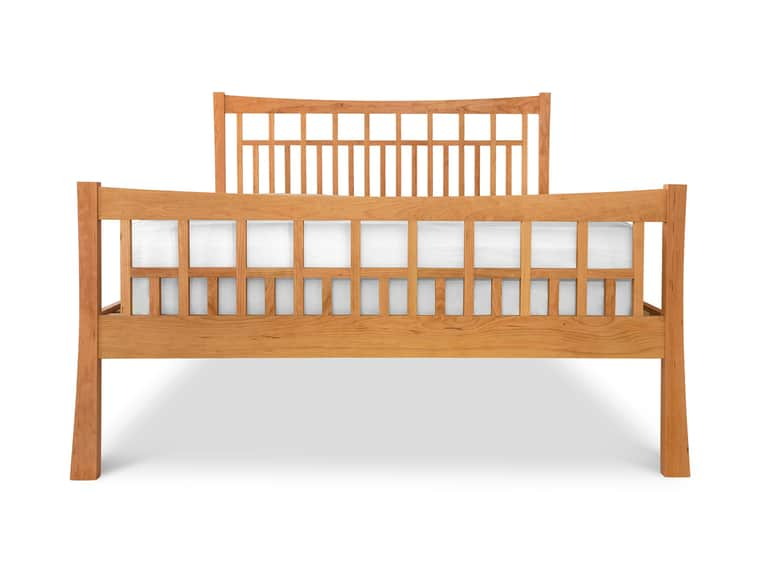
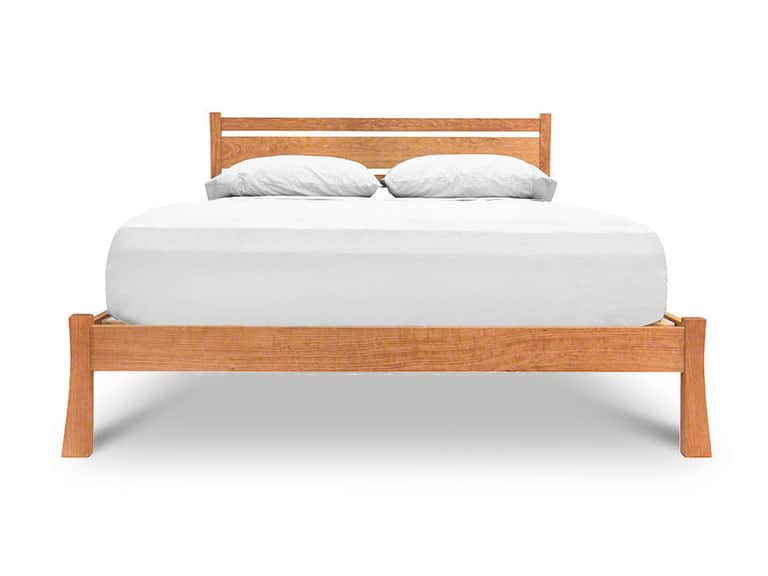
The frame itself deserves attention, too. Height, access, and the space available for bedding can shape daily comfort in less glamorous but consequential ways. A high mattress on a tall frame may make getting in and out awkward; a low platform may change the room’s proportions. Consider the complete bed, not just the mattress surface.
Separate the mattress feel from the bedding
Sheets, protectors, toppers, and pillows can all influence what a mattress feels like. A thick, cushioned layer may soften the initial impression; a taut, smooth sheet may make the surface feel more immediate. A pillow that is too high or too low can create discomfort that is mistakenly attributed to the mattress. When possible, assess the bed with a simple, familiar arrangement and note any accessories that materially change the feel.
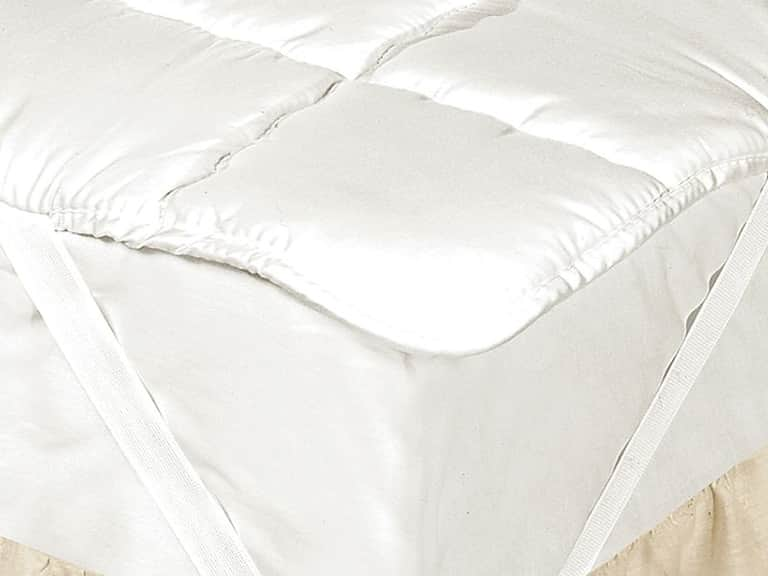
A mattress pad can add a layer of softness and protection, but it is not a remedy for every mismatch. For example, the Downtown Company Luxury Silk Mattress Pad is described as having silk-fiber fill, a cotton cover, and elastic anchor bands. As with any pad, its added layer may change the feel of the sleep surface. If you try the Regal Superb with a pad, ask whether the same arrangement will be used at home and follow the care instructions for both pieces.
Keep the pillow in view during a trial, particularly if you are evaluating neck or shoulder comfort. A pillow that suits one sleeping position may not suit another, and a change in mattress height or softness can alter how your head and neck are supported. If the mattress feels promising but something seems wrong, try to identify whether the issue is coming from the mattress, pillow, or combination of the two.
Questions worth asking before you decide
A focused conversation is more useful than a recital of adjectives. The following questions can help establish what you are evaluating and what ownership will involve:
- What is the current, exact material specification for the Regal Superb in this size?
- How is its support system constructed, and what are the comfort layers intended to do?
- Which sleeping positions and comfort preferences should a shopper test carefully?
- What base is recommended, and are there limits on the type or spacing of its supports?
- Does the mattress need to be turned or rotated, and how often?
- What are the care instructions for the mattress and its cover?
- What are the delivery, trial, return, and warranty terms, and what conditions apply?
- Can the model’s specification be confirmed in current written documentation?
These questions are not meant to turn a comfortable purchase into an examination. They help distinguish facts from assumptions. A knowledgeable representative should be able to explain the model without insisting that a certain material or firmness suits everyone. If an answer is uncertain, it is sensible to seek confirmation before relying on it.
Comfort changes with context
A mattress is encountered in a room, under particular bedding, at a particular temperature, and often beside another sleeper. Heat, humidity, clothing, and the feel of the cover may all affect comfort. If temperature regulation is important to you, ask what claims are supported by the mattress’s materials and construction, and consider the complete bedding arrangement. No single material description can guarantee that every sleeper will feel cool throughout the night.
Couples should consider movement and usable space as well as initial softness. If one person shifts frequently, observe whether the other notices. A showroom is not a controlled test, but lying down together can reveal obvious differences in edge feel, motion, and personal space. Mattress size matters here: a comfortable design may feel less accommodating if the chosen width leaves little room for both sleepers.
Age and physical comfort can also affect preferences. A mattress that feels pleasantly firm to one person may create pressure for another, and a familiar sleeping position may change over time. If you have persistent pain or a medical concern, a mattress trial should not be treated as diagnosis or treatment; seek appropriate professional advice where necessary. The mattress question is simply whether this surface feels comfortable and practical for you.
A measured way to compare
When comparing the Regal Superb with other mattresses, avoid judging by price, brand reputation, or construction vocabulary alone. Make a short record of what you felt and what you learned. Note the position you tested, the time spent lying down, where you felt pressure, how easily you moved, and which base and accessories were used. Then record the verified construction details and care requirements.
This creates a more useful comparison than a memory of which showroom bed seemed most impressive. One mattress may feel softer at first but less comfortable after several minutes; another may have a construction that appears appealing yet does not suit your preferred position. Your notes help keep the decision anchored in the experience you actually had.
It is equally important to identify what you cannot establish during a short visit. You cannot know with certainty how a mattress will feel after months of use, how it will respond to your home’s climate, or whether a material claim has been described completely unless you have checked the relevant documentation. Treat those unknowns as reasons to investigate trial terms and care requirements, not as invitations to guess.
The quieter questions of ownership
Luxury is often discussed as a matter of sensation, but ownership has a calendar. Ask about delivery access, installation, packaging removal, and the practical steps required to place the mattress on its base. Confirm the expected lead time and what happens if the chosen size cannot pass through a stairwell or doorway. These details have little romance, but they can determine whether the arrival is serene or needlessly complicated.
Care deserves similar attention. Some mattresses require turning; others may call for rotation or a particular kind of protection. Follow the manufacturer’s instructions rather than assuming that every mattress is maintained in the same way. A protector can help guard against ordinary spills and wear, but its fabric and construction may alter the surface feel. Choose one with the mattress’s care guidance in mind.
Read warranty terms closely and distinguish them from a comfort guarantee or trial policy. A warranty generally addresses specified defects under stated conditions; it does not necessarily promise that a mattress will remain comfortable for every sleeper. Understand what is covered, how a claim is assessed, and what foundation or maintenance requirements apply. Clear expectations are part of a sound purchase.
A useful conclusion is specific
After a careful assessment, the answer need not be dramatic. You may conclude that the Regal Superb feels comfortable in your preferred position, that its verified construction matches the materials you want, and that its base and maintenance requirements suit your home. Or you may find that the surface creates pressure, that the specification remains unclear, or that another mattress better fits your needs. Either conclusion is more valuable than a vague impression that a prestigious name must be right.
The strongest mattress buying guide is ultimately a guide to attention. Attend to the body’s response, the details of construction, the support beneath the mattress, and the terms that govern its care and trial. Ask for specifics, test in realistic conditions, and allow yourself to take time. Comfort is not a trophy awarded to the most expensive or most elaborately described bed. It is the settled, ordinary feeling of being well supported enough to forget the mattress and get on with the night.