Materials & Craft
What Goes Into an Organic Mattress? Materials, Layers, and Longevity
An organic mattress is not a single substance so much as a carefully assembled argument about comfort: a proposition made in latex, wool, cotton, and sometimes springs. Its feel depends on the order of those materials, the way they are held together, and the life they are expected to lead after the showroom lights have gone out.
The word “organic” has an agreeable simplicity. It suggests a field, a fiber, an absence of unnecessary intervention. On a mattress label, however, it can conceal a rather complicated object. A mattress may have an organic cotton cover, a layer of certified organic latex, wool from a particular source, and an interior whose other components follow different standards altogether. Or it may use natural materials without carrying an organic certification at all. These distinctions matter—not because one vocabulary guarantees a better night, but because the materials and the way they are assembled shape the mattress’s comfort, care, and useful life.
It helps to think of a mattress as a small landscape with several elevations. The cover is the outer terrain. Beneath it sit the comfort layers, which soften the first meeting between body and bed. Deeper down, a support core carries much of the load. Around or between these elements may be wool, cotton, latex, springs, or other materials that manage moisture, airflow, resilience, or structure. A mattress’s character emerges from the whole arrangement; a material name, taken alone, tells only part of the story.
What “organic” can—and cannot—tell you
In ordinary conversation, “organic mattress” can sound like a complete description. In practice, it is worth asking what, precisely, is organic. The term may refer to one component, several components, or a product whose materials have been assessed under a defined certification program. Certification standards differ in what they cover and how they verify claims. Some address the agricultural origin of fibers; others consider processing, chemical inputs, or the finished article. The label is a useful beginning, not a substitute for reading the details.
A careful materials description should name the layer, the material, and—where relevant—the standard or certificate that applies to it. “Organic cotton cover,” for instance, is more precise than “organic construction” if only the cover is certified. “Natural latex” and “organic latex” are not interchangeable phrases: the first describes a material category, while the second makes a claim about production standards that should be supported by documentation. Nor does “natural” mean that a component has had no processing. Latex must be harvested and transformed; fibers are cleaned, spun, woven, or felted. Craftsmanship begins in understanding those transformations rather than pretending they do not exist.
The most useful questions are modest and concrete. Which parts of the mattress are certified? What is the support core made from? Are adhesives used, and if so, where? How are the layers secured? What care does the maker recommend? A company able to answer plainly is often more helpful than one that relies on broad, soothing adjectives. The distinction is especially important when comparing organic mattress materials, because two mattresses carrying similar language may have very different internal designs.
Latex: buoyancy, response, and the core beneath
Latex is valued in mattress construction for its elastic response. Press a hand into a latex layer and it yields, then rises again; under a sleeping body, that quality can feel buoyant rather than deeply enveloping. The sensation varies with formulation, density, thickness, and the arrangement of the layers. A thin layer over a firm support core will not behave like a generous comfort layer. Nor does the word “latex” alone predict whether a bed will feel soft, firm, lively, or quiet.
Latex used in mattresses may be made through different processes, commonly described as Dunlop or Talalay. These names refer to methods of manufacture, not simple grades on a ladder from inferior to superior. The process can affect the material’s consistency and feel, but the finished mattress still depends on its particular formulation and construction. When comparing a latex mattress, look beyond the process name to the thickness of each layer, its stated firmness or density, and its position in the design.
The support core deserves special attention. Some mattresses use a substantial latex core; others combine latex comfort layers with pocket springs or a different structural base. A layered design can distribute functions: one material may provide a responsive surface, while another supplies deeper support. The result is not automatically better or worse than a one-material approach. It is simply a different set of compromises. For a sleeper, the practical question is whether the bed maintains comfortable alignment without creating undue pressure at the shoulders, hips, or other points of contact.
Latex can be durable, but durability is not a talisman attached to the material name. It depends on quality, thickness, the weight and movement placed on it, the support beneath it, and the conditions in which the mattress is used. A mattress that feels resilient at first may change over time; a well-designed layer can still be undermined by poor support or inadequate construction. Claims about longevity deserve to be accompanied by clear warranty terms and guidance on use, rather than a promise that one material lasts forever.
Wool: a natural buffer at the surface
Wool often appears near the top of a mattress, where it can contribute cushioning and help manage humidity. Its fibers can take up and release moisture, a property that may support a drier-feeling sleep surface. Wool also has a springy, compressible character that differs from the more immediate rebound of latex. In a carefully layered mattress, it can soften the transition between the body and the firmer materials below.
A wool layer is not a miniature climate-control system, and its effect depends on the quantity, density, and position of the fiber, as well as on the room, bedding, and sleeper. A thick wool upholstery layer may feel different from a light batting. Some designs quilt wool into the cover; others place it deeper in the upholstery. The material’s source and preparation may also matter to people evaluating animal welfare, traceability, or environmental standards. Again, the useful description is a specific one: what kind of wool, where it sits, and what documentation accompanies it.
Wool also asks for sensible care. It is generally not a material to treat as though the whole mattress were a washable duvet. Moisture should be managed with breathable bedding and a suitable protector, and cleaning should follow the maker’s instructions. Spot cleaning, airing, or rotating may be recommended, depending on the construction. Excess water, harsh chemicals, or direct heat can harm materials even when the intention is freshness.
Cotton, silk, and other fibers in the mix
Cotton may appear in the cover, in quilted upholstery, or between other layers. Its usefulness lies partly in its familiar hand and ability to be woven or knitted into fabrics with different textures and weights. A cotton cover is not, by itself, evidence that the interior is organic; nor does a soft cover tell you how the mattress will perform after years of compression. Still, the cover is more than decoration. It is the surface that meets the sheets, and its weave, quilting, and tension influence the first impression of the bed.
Other natural fibers sometimes appear in premium constructions. Silk can contribute a fine, smooth layer; cashmere and alpaca may be used for soft, compressible loft; horsetail can provide spring and channels for airflow. These materials are not interchangeable, and their presence does not settle the question of comfort. What matters is their role within the whole. A luxurious fiber in a thin layer may contribute more to the feel of the surface than to the bed’s structural life. The list of ingredients is less revealing than the recipe.
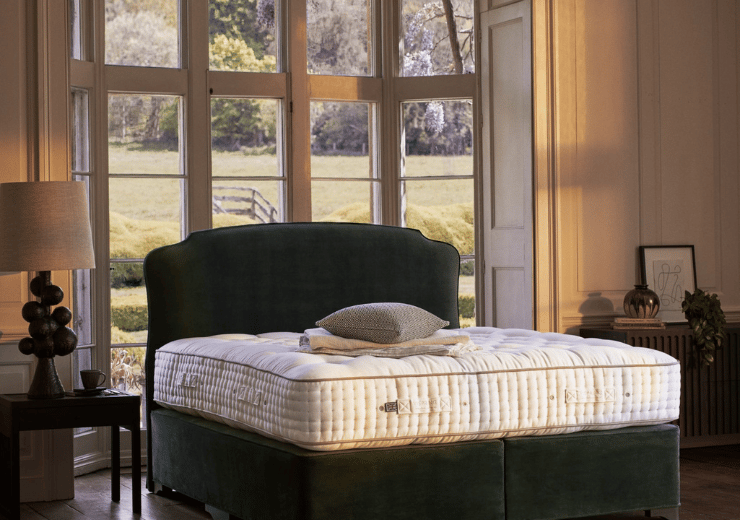
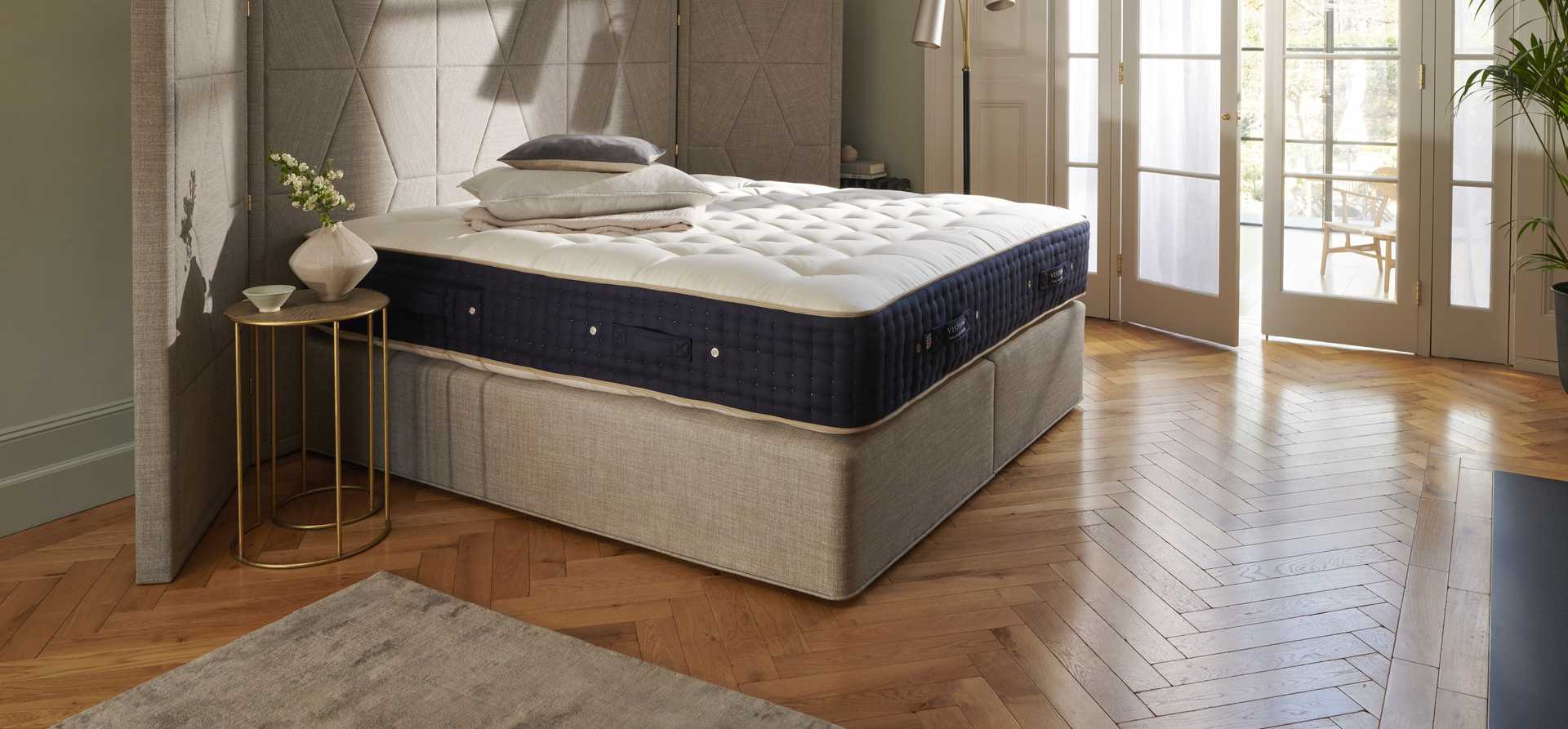
One example of a layered mattress that names several natural fillings is the Vispring Opulence Mattress, which describes cotton, wool, silk, alpaca, cashmere, bamboo, and horsetail alongside a pocket-spring construction. Such a specification can help illustrate how fibers and springs may be arranged to perform different tasks. It should not, however, be read as proof that the entire mattress is organic: the presence of natural or organic components is distinct from a claim that the finished product is wholly certified organic.
The architecture of layers
A mattress is a structure, and its layers have a sequence. At the top, the cover and upholstery determine the initial feel. Comfort layers compress under the body and distribute pressure. A deeper core maintains support and helps the bed retain its shape. In a spring mattress, individual coils may respond separately; in a latex design, the core may provide continuous support with a different kind of elasticity. Some mattresses combine these approaches, using springs beneath natural-fiber upholstery or latex over a firmer base.
Layer order changes sensation. Wool directly beneath the ticking may lend a soft, dry surface; latex closer to the body may create a more buoyant feel. A spring unit can add responsiveness below the upholstery, while its gauge, arrangement, and edge construction influence the support system as a whole. A mattress with multiple layers may be highly considered, but complexity is not a synonym for quality. Each added component should have a discernible purpose.
There is also the question of how layers are held in place. Quilting, tufting, stitching, and other construction methods can help prevent upholstery from migrating. Some makers use adhesives in parts of a mattress; others emphasize mechanical methods such as tufts or stitching. These choices may affect repairability, material claims, and the way a mattress is built, but they should be assessed in context. A construction detail is meaningful when it is explained accurately, not merely given a romantic name.
Edge support, too, belongs to the architecture. The mattress should behave reasonably consistently from the center toward the perimeter, especially if the full sleeping surface is used. In spring models, side-stitching or a reinforced border may be part of the design; in other constructions, different methods provide stability. The frame or foundation beneath the mattress matters as well. A sound mattress placed on an unsuitable base may sag or feel uneven, while proper support can help preserve its intended performance.
Comfort is personal, but it can be evaluated
Firmness labels offer a rough map, not a universal measurement. A “medium” mattress can feel quite different depending on body weight, sleep position, proportions, and the mattress’s construction. Someone who sleeps on their side may notice pressure at the shoulder and hip that a back sleeper does not. A couple may discover that a partner’s movement, edge use, or preference for a different surface changes the decision. There is no virtue in choosing the hardest or most elaborate bed if it does not suit the person sleeping on it.
When possible, test a mattress under conditions that resemble ordinary use. Lie in your usual sleep position for more than a moment; notice whether the body feels supported rather than suspended or compressed. Pay attention to ease of turning, pressure points, and whether the surface feels warm or cool to you. A brief showroom visit cannot reproduce a season of sleep, which is why trial periods and return policies deserve close reading. Find out how long a trial lasts, whether transport or restocking fees apply, and what condition the mattress must be in when returned.
People with persistent pain, mobility concerns, or particular medical needs may benefit from discussing sleep setup with a qualified clinician. Mattress language can sound almost therapeutic, but a material claim is not a medical recommendation. Comfort is important; so is recognizing the limits of what a bed can promise.
Durability, maintenance, and the passage of years
Mattress durability is a relationship between materials and use. Foam or latex layers may soften; fibers may compress; springs may lose some of their original tension. How quickly these changes appear depends on construction, the sleeper’s weight, frequency of use, ventilation, and whether the mattress is supported correctly. Even the best materials have a working life. The aim is not to find an object impervious to time but to understand how it is likely to age.
A maker’s care instructions are part of the product, not an afterthought. Some mattresses are designed to be rotated head-to-foot; others may not be reversible because their layers are arranged in a particular order. Rotating a mattress that is not intended to be flipped can be sensible, while turning one upside down may place the support core at the surface and defeat the design. Before moving or airing a mattress, consult its specific guidance.
A breathable mattress protector can help guard against spills and body oils, although an overly impermeable cover may alter the feel or airflow of the sleep surface. The sheets and pillowcases matter, too: bedding that manages moisture comfortably can support the mattress’s own materials without pretending to transform them. Regularly airing the room, keeping the foundation stable, and addressing spills promptly are unglamorous habits, but longevity is often made of unglamorous habits.
Warranty language should be read with equal care. A warranty typically defines particular defects and conditions; it is not the same as a guarantee that the mattress will feel unchanged for a stated number of years. Ask what counts as a covered indentation, what evidence is required, whether the original foundation must be used, and how transportation or replacement is handled. The fine print may be less beautiful than a hand-stitched border, but it is part of the object’s life.
A practical way to compare organic mattresses
The most effective comparison begins with a short inventory. Write down what you know about the cover, comfort layers, support core, and foundation requirements. Mark which materials are certified, which are described as natural but not certified, and which are not specified. This exercise turns an alluring list of fibers into a readable construction plan.
- Identify the layers. Ask what sits closest to the body, what provides the core support, and how thick each layer is.
- Check the claims. Distinguish organic certification from natural-material descriptions, and find out which components each claim covers.
- Evaluate the feel. Consider your sleep position, pressure points, preferred firmness, temperature preferences, and movement through the night.
- Understand the construction. Look for an explanation of how layers are secured, how the edge is built, and what foundation is required.
- Read the care and warranty terms. Confirm whether the mattress should be rotated, how it may be cleaned, and what the warranty actually covers.
- Consider the full system. A mattress works with its base, protector, sheets, and pillows; the comfort of one component can be altered by another.
This method is less thrilling than an adjective such as “cloudlike,” but more likely to be useful. It allows a buyer to compare like with like: a latex comfort layer against another latex layer, a spring core against another spring core, a wool surface against another wool surface. It also makes room for a more honest conclusion. A mattress can be thoughtfully made and still feel wrong to a particular sleeper.
The value of knowing what is inside
A bed is easy to overlook once it has been made. Sheets conceal its construction; the bedroom is arranged around it; the night passes. Yet the mattress is an intimate object, shaped by the decisions of growers, processors, upholsterers, and builders, and by the ordinary body that returns to it each evening. To understand its materials is not to turn sleep into an examination. It is to replace vague reassurance with a clearer sense of what one is choosing.
The best organic mattress is not necessarily the one with the longest ingredient list, the most expensive fibers, or the most emphatic label. It is one whose materials are described transparently, whose layers work together, whose firmness suits the sleeper, and whose care requirements are realistic. Latex may offer buoyant support; wool may bring breathable cushioning; cotton and other fibers may contribute to the cover and upholstery; springs may add a distinct form of response. None of these materials, by itself, completes the story.
In the end, a mattress can be understood as both an object and a promise: that the surface will meet the body with a certain balance of softness and resistance, and that the construction will hold up to repeated use. The promise is strongest when it is specific. Ask what the layers are, how they are made, how they are secured, and how they should be cared for. Then lie down, if you can, and let the body make its own observation. A well-described mattress cannot guarantee perfect sleep. It can, at least, make the choice less mysterious.